
Opinion · Editorial Board
Europe’s War Got the World. Africa’s Wars Got Silence.
Sanctions, weapons and billions in aid arrived for Ukraine within days. Congo and Sudan are still waiting. Africa has noticed, and Ukraine is paying the price for the West’s double standard.
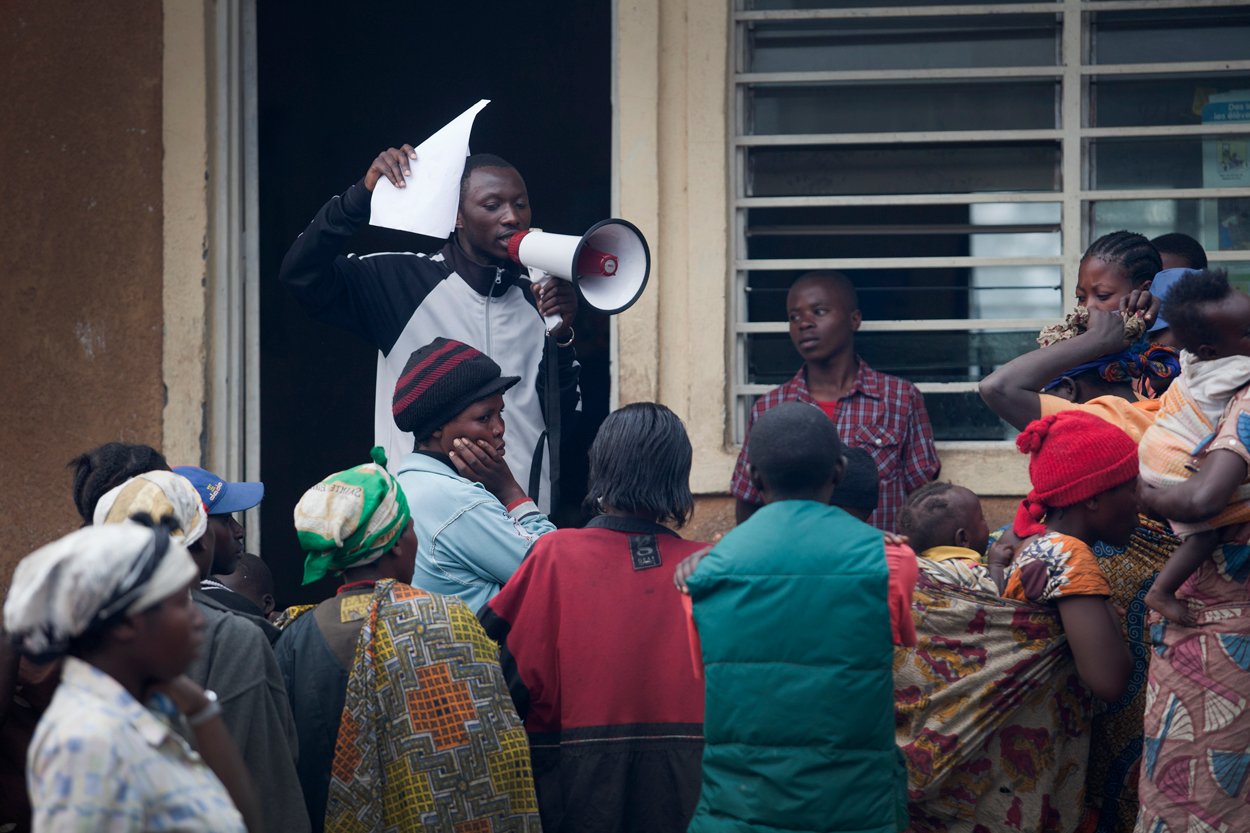
When Russia invaded Ukraine, the West moved fast — sanctions, weapons, billions in aid, nonstop media coverage. When millions die in the DRC or Sudan, the silence is deafening. That double standard isn’t an accident. It’s the same pattern that’s played out for centuries: European wars get the world’s attention, African wars get ignored.
The editorial board believe race is the main driver. The West responds to suffering that looks like its own. Ukraine is a European war between white nations, and that triggers a response no African conflict ever has. African countries see this clearly, which is why most won’t send soldiers or support to Ukraine — they’re watching the West protect its own while ignoring theirs.
The history is unambiguous. Apartheid South Africa is the clearest case. The National Party took power in 1948. The Sharpeville massacre in 1960 killed sixty-nine peaceful protesters, and the UN condemned apartheid that same year. But the West — the US and Britain especially — kept trading with Pretoria for another twenty-five years. A voluntary arms embargo came in 1963, made mandatory only in 1977. Comprehensive US sanctions didn’t pass until 1986, over President Reagan’s veto, and even then gold, diamonds, and strategic minerals were exempt.
That’s nearly four decades of Western governments doing business with a racist regime while Black South Africans were shot in the streets. The pressure that finally worked came from below — the Free South Africa Movement, the Congressional Black Caucus, TransAfrica, campus divestment campaigns. The West didn’t lead. It was dragged.
The same pattern shows in the numbers today. Only twenty-eight of Africa’s fifty-four countries voted for the March 2022 UN resolution condemning Russia’s invasion — about half, against eighty-one percent of non-African countries. Seventeen abstained. South Africa, Senegal, Uganda, and Mali among them. Mali’s foreign minister went further, calling Ukraine a terrorist state. Uganda’s president Yoweri Museveni spoke openly of Western double standards. His son tweeted that the majority of non-white mankind supports Russia’s stand.
The voices making this argument aren’t fringe. Al Jazeera’s columnist wrote that Western journalists believe some lives are more valuable than others — that the suffering of white Christians is worthier of the world’s focus than the suffering of Ethiopians, Somalis, Sudanese, Yemenis, Syrians, Afghans, Libyans, Iraqis, and Palestinians. A South African outlet, New Frame, put it bluntly: the reasons for the double standard are clear — the victims in Ukraine are white, and their country is aligned with the US. A Kenyan commentary captured the media gap in one line: when bombs fall in Africa, the world says it’s sad. When bombs fall in Europe, the world says it’s a tragedy.
“When bombs fall in Africa, the world says it’s sad. When bombs fall in Europe, the world says it’s a tragedy.”
The refugee treatment made it concrete. The African Union’s president and its special envoy both condemned the differential treatment of Africans trying to flee Ukraine. Poland’s ambassador to the UK suggested Black people in Ukraine should be less visible. Meanwhile, European countries that had spent years building Fortress Europe opened their borders to Ukrainians within days.
Even Western figures have admitted the perception. Former Swedish prime minister Carl Bildt wrote that most of the world perceives a double standard in Western policy on the two wars — rightly or wrongly, he said, this is something we must deal with. Ugandan scholar Mahmood Mamdani has noted that Western foreign policy moralizes conflict in Europe while securitizing crises in the Global South. Kenyan scholar Patrick Lumumba asks where this energy was when millions died in the Congo, in Libya, in Iraq. And Dr. Arikana Chihombori-Quao, former African Union ambassador to the US, described the Western mobilization around Ukraine as evidence of a world where African suffering does not trigger global action unless foreign interests are at stake.
Commentators like Mr. Midas Touch talk endlessly about Russia and Ukraine but give African wars almost no mention. That silence tells you everything.
The Board’s View
The West spent decades protecting its own interests while African lives waited. Ukraine is now discovering what that looks like from the other side. Until the West treats African lives with the same urgency it gives European ones, Ukraine won’t get the global backing it expects — and it shouldn’t.
Opinion pieces reflect the views of the Bear News editorial board.