
Global Economy · Editorial Board
Capital is dear. The Delhi list is not.
A House of Lords peer and an Indian business figure used a Federation of Indian Industry gathering to name the sectors that still need money — just as funding markets turn selective, and as India and China press their claim in artificial intelligence.
NEW DELHI — The Federation of Indian Industry’s meet-and-greet with Baroness Sandip Verma this week was a small room with a large subject. Infrastructure, energy, mining, roads, food processing, education, pharmaceuticals and information technology: eight sectors, and three governments — India, the United Kingdom and the states of Africa — that cannot fund them on courtesy alone.
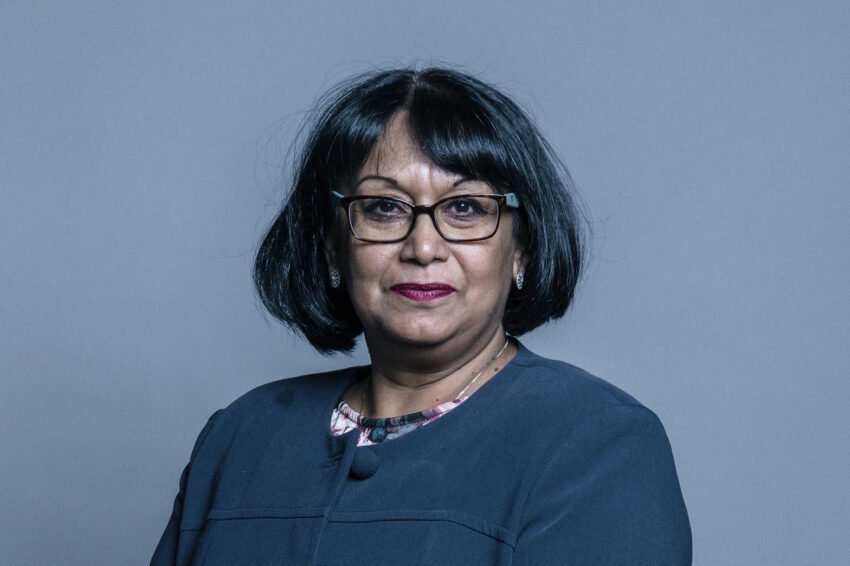
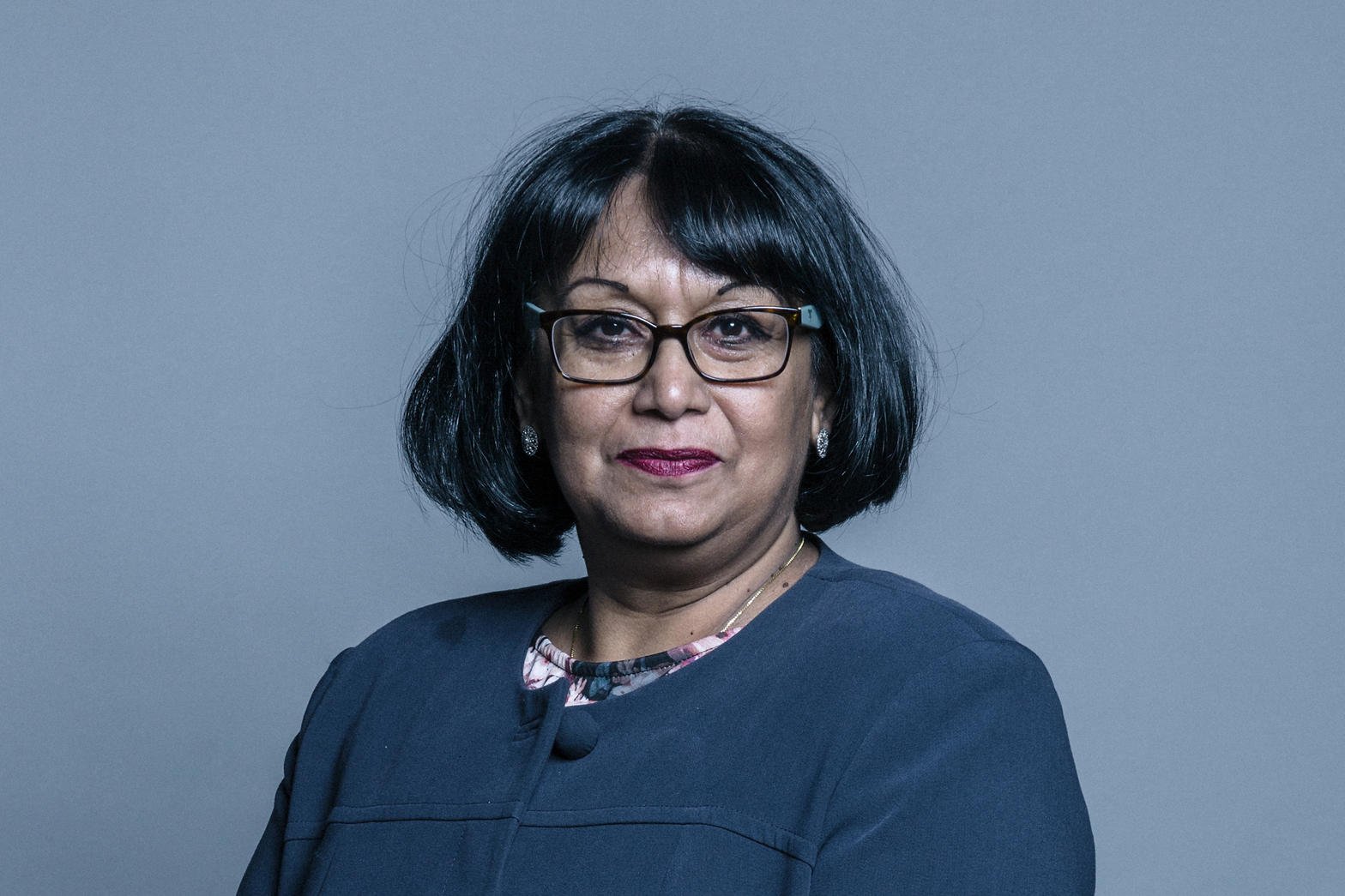
The two figures who gave the hour its public record were the baroness, a member of the UK House of Lords, and Tarun Singhal, a Delhi-based member of the British Business Group. He posted on 1 October 2026. She answered on the thread: “Great seeing you today, Tarun. Thank you for your very insightful question.” A second note under the name sandip verma said the same thing in almost the same words. The welcome board billed her as The Rt Hon’ble Baroness (Dr) Sandip Verma. Sandy and Sandip are the same peer.

Singhal called the session a privilege, and called her “an institution in herself — a leader whose remarkable journey, wisdom and commitment to building bridges across nations continue to be deeply inspiring.” He named Dr Deepak Jain, president of the federation; Ashok Verma; Manjula Manoj; Shivaarti Bajaj; Pradeep Gandhi; and other leaders. The conversations, he wrote, on “emerging opportunities across India, the UK and Africa were particularly insightful.” His own theme was that artificial intelligence is “revolutionising industries; not merely by automating processes, but by making knowledge, expertise and human potential scalable.” He thanked the federation for a platform “that look[s] beyond boundaries and towards shared possibilities.”
That is enough biography. The point of the gathering is the list, and the market in which the list now has to be financed.
A funding market that is open, and expensive
The global economy in the autumn of 2026 is not short of paper. It is short of cheap paper. Yields on 10-year US Treasuries, the benchmark for dollar borrowing almost everywhere, have risen to around 5 per cent. Investors are pricing further Federal Reserve increases into the middle of next year, after a quarter-point rise this month, the first since 2023. Longer-term rates have moved up across developed markets, not only in the United States, on sticky inflation and growth that has refused to roll over.
Liquidity has not vanished. Corporates issued about $1 trillion of new debt in 2026, and in the main credit markets that supply coincided with tighter bid-ask spreads and higher volumes. Emerging markets are the exception. Sovereigns there have sold foreign-currency bonds at a record pace — about $200 billion by late September, after a record $190 billion in the eight months to August, according to the Institute of International Finance — even as the dollar revived and the war in Iran forced some Gulf names back to market to fund the cost. Only about $72 billion of this year’s sovereign total is new money rather than refinancing. A third is coming in euros, as borrowers hunt a cheaper curve. Secondary-market liquidity in emerging-market credit has not improved with the rest of the bond world. Spreads of execution stayed wide. Volume gains over 2025 have been given back.
The Bank for International Settlements, in a September working paper, described the stock of global imbalances as a cobweb: the US net international investment position has deteriorated while most other major economies have improved, and valuation gains since 2010 have flattered growth while leaving countries exposed to a dollar move, an equity repricing, or another rise in global rates. A correction in US equities, the paper finds, would spill negatively across most of the sample. This is the funding weather in which an African road authority, an Indian grid company or a British development bank now tries to syndicate a project.
For the sectors named in Delhi, the implication is plain. Public budgets will not triple themselves. Blended finance — guarantees, first-loss capital, development-bank anchors — is how private money still shows up when the risk-free rate is 5 per cent. Tripling investment in infrastructure, energy, mining, roads, food processing, education, pharma and IT is the right scale for the trade India, Britain and Africa say they want. It is also a harder raise than it was in 2021. The projects that clear will be the ones with offtake, a contractor a lender has paid before, and a currency plan. The rest will stay in the communiqué.
India, China, and the AI race that is no longer a gap
Singhal’s line in the room — that AI scales human expertise rather than merely automating tasks — lands in a year when the capability race has tightened, and when India and China are the two stories outside the American labs.
Stanford’s 2026 AI Index puts the gap between the best American model and its nearest Chinese rival at 2.7 per cent as of March, down from a range of 17.5 to 31.6 points in May 2023. Six labs, including Alibaba and DeepSeek alongside Anthropic, xAI, Google and OpenAI, sit within a narrow band on public leaderboards. China does not match American private investment — $12.4 billion against $285.9 billion in 2025 — and it does not match the US stock of data centres. It leads in volume: 69.7 per cent of global AI patent filings, 23.2 per cent of AI publications, and industrial-robot installations nearly nine times the American rate in the latest count. Its power reserve is the quiet advantage. The Index notes a Chinese electricity margin that has not fallen below 80 per cent, against an American grid the same report treats as a bottleneck.
India’s lead is different, and more commercial than foundational. More than 1,700 AI-native companies have raised about $5.5 billion in equity. Funding rebounded to $856 million in 2025 and has already reached $626 million in 2026 year to date, after a $1.1 billion peak in 2022. The IndiaAI Mission, budgeted at Rs 10,372 crore, is pushing domestic GPU access and models from a few billion parameters into the tens of billions. Adoption, not patents, is the Indian claim: a services economy already organised around exporting skill, now testing whether that skill can be delivered by software as well as by people. That is the modest version of what was said in the FII room. It does not require a national champion. It requires power, data, and a funding market that will still underwrite a data-centre loan.
“Africa should help build the next generation of AI. That requires research, computing capacity, skills and institutions able to lead that work.”Abiy Ahmed, Prime Minister of Ethiopia
Ethiopian Prime Minister Abiy Ahmed put the African half of this at the September BRICS meetings: “Africa should help build the next generation of AI. That requires research, computing capacity, skills and institutions able to lead that work.” Prime Minister Narendra Modi used the same week for talks with Abiy, with South Africa’s Cyril Ramaphosa, with African Union chair Evariste Ndayishimiye, and with Nigeria’s vice-president. Britain’s side of the triangle is already on paper. Keir Starmer, in Mumbai in October 2025, called the UK–India trade agreement “a breakthrough moment” and brought 126 firms. Baroness Chapman has said London is “moving from donor to investor,” and in June 2026 noted £17.7 billion of UK imports from African partners under economic partnership agreements.
The peer, and the case for a wider table
Baroness Verma was born in Amritsar in 1959, came to England as a child, and took her seat in 2006. She was a minister for energy and climate change, then for international development. Energy and overseas development are not adjacent to this agenda. They are the agenda. Her reply to Singhal — short, and about the question — is the right register for a relationship that has to survive a 5 per cent Treasury yield.
The missing chair is American building capacity. The United States is not only the source of the risk-free rate. It is where firms such as Bechtel, Fluor and AECOM still assemble crews and project finance at the scale a corridor requires, and where owners such as Brookfield hold utilities and transport under long concessions. India, Britain and African governments should put that class of developer into the next round, beside Indian contractors and British and African capital. In a selective funding market, a known builder is a form of liquidity.
Singhal’s closing line still fits a general argument: the opportunity is “connecting talent, technology, capital and capabilities across geographies to create partnerships that are inclusive, innovative and impactful.” The Delhi gathering did not allocate the capital. It named the sectors, in a week when capital has a price again, and when India and China have made AI a three-cornered race. That is a useful hour.
The Board’s View
The projects that clear will be the ones with offtake, a contractor a lender has paid before, and a currency plan. The rest will stay in the communiqué. In a selective funding market, a known builder is a form of liquidity.
Sources include the 1 October 2026 account of the FII gathering, Institute of International Finance issuance figures, BIS Working Paper 1379, MarketAxess and S&P credit-market data, the Stanford 2026 AI Index, and 2026 reporting on India’s AI funding. Editorial Board pieces represent the view of Bear News 365.