
Energy
Stahl Brenn Group Moves Toward Full Feasibility on Multi-Billion Cavite Petroleum Terminal, Betting on a Region Rattled by Energy Insecurity
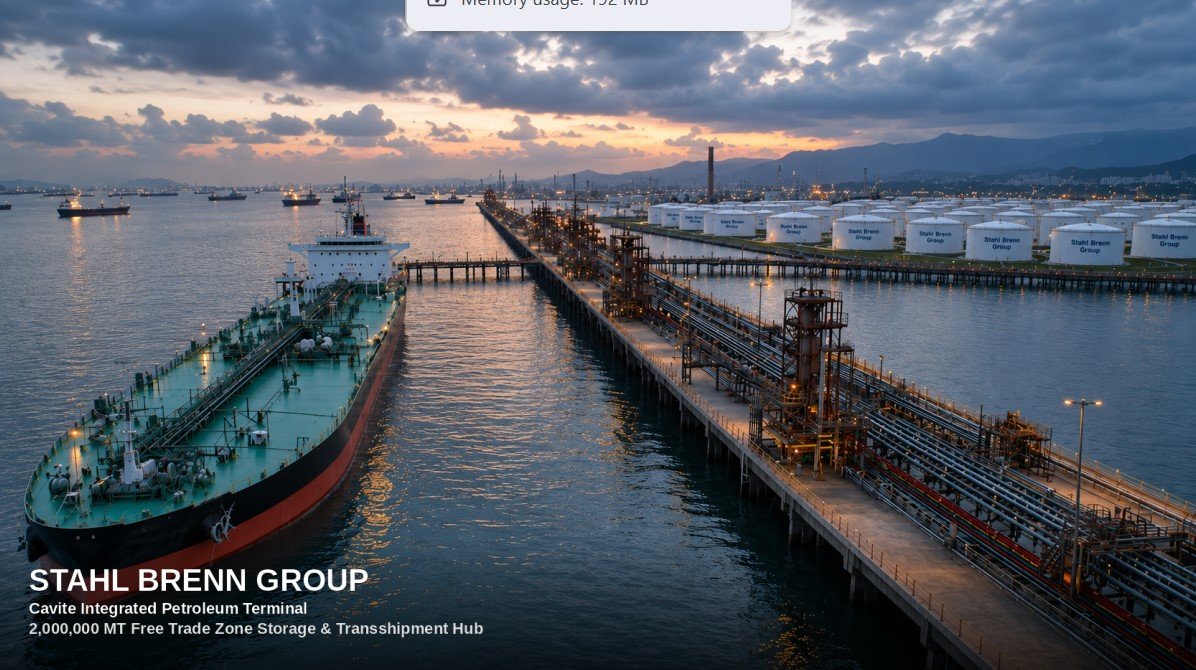
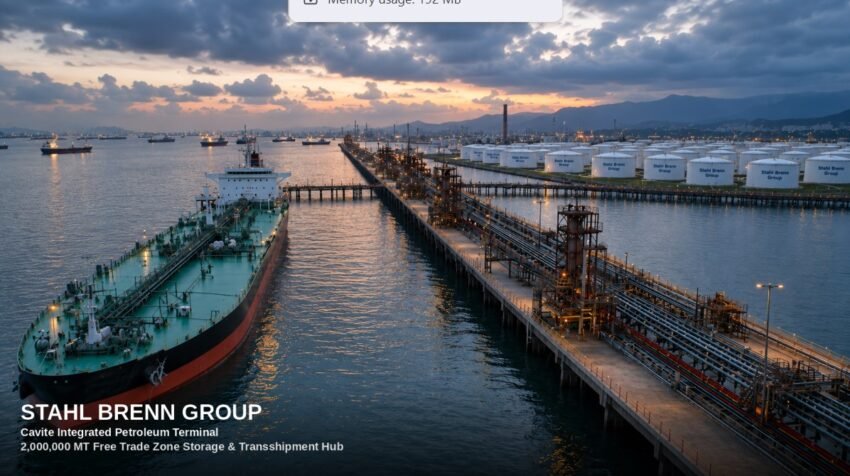
Along a stretch of reclaimed coastline on Manila Bay, a project with the scale to reshape Southeast Asia’s petroleum logistics map is quietly moving from concept toward engineering reality. Stahl Brenn Group, the developer behind the proposed Cavite Integrated Petroleum Terminal, has confirmed to Real News Online that it has completed the first phase of its initial development study and is now preparing to launch a full feasibility program for a 2,000,000-metric-ton free trade zone storage and transshipment facility — a project the company says will rank among the largest independent petroleum terminals in the Asia-Pacific region.
The company has also secured control of approximately 600 acres of coastal land that it describes as ideally suited to the development, and has begun a formal process to select an engineering, procurement and construction (EPC) contractor to carry out the detailed feasibility work that will precede a final investment decision. Company representatives put the all-in cost of the completed terminal at between $3.5 billion and $5 billion, with construction expected to generate several thousand direct and indirect jobs across engineering, marine works, and terminal operations.
“This is a project built for the region, not just for one country,” a Stahl Brenn Group representative told BN365, describing ambitions to position the terminal alongside the world’s established petroleum trading hubs. Executives point to Rotterdam, the Amsterdam-Rotterdam-Antwerp cluster, and Singapore’s Jurong Island as reference points for what a Philippine free trade zone terminal could become: a neutral, tax-advantaged storage and blending point serving traders, refiners and utilities well beyond the Philippines’ own borders.

A Free Trade Zone Model, Not a National Reserve
The distinction matters. While much of the current political energy in Manila is focused on building a sovereign, government-controlled strategic reserve, Stahl Brenn Group’s terminal is being structured as a privately financed free trade zone asset — a model that allows fuel, crude and blended products to move in and out of the Philippines largely outside the domestic tax and tariff regime, similar to how Jurong Island and Rotterdam function as pass-through hubs for global trade rather than as national stockpiles.
That structure, company representatives argue, is precisely what makes the project complementary to, rather than competitive with, the government’s own energy security push — and what could make it attractive to international oil majors, trading houses and government stockpiling programs from across Northeast and Southeast Asia looking for storage capacity outside the traditional Middle East supply corridor.
2,000,000 MTStorage Capacity
~600 AcresLand Secured
$3.5B–$5BEstimated Cost
Manila’s Reckoning With Energy Vulnerability
The timing is not incidental. The Philippines has spent much of 2026 confronting an uncomfortable truth about its own energy fragility. When the Strait of Hormuz was disrupted earlier this year amid the wider Middle East conflict, the country’s fuel stockpiles — built almost entirely on private industry inventories rather than any government reserve — fell within weeks from roughly 57 days of supply to 45, sending diesel and gasoline prices sharply higher and prompting President Ferdinand Marcos Jr. to declare a state of national energy emergency.
That episode has driven a wave of legislative activity. Senate President Francis “Tito” Sotto filed the Philippine Strategic Petroleum Reserve Act, while Senator Francis “Chiz” Escudero has separately pushed Senate Bill 1993 to fund a government-owned crude tank farm capable of holding between 90 and 180 days of national consumption. “A strategic crude oil stockpile is our shield,” Escudero has argued, warning that the country cannot keep absorbing economic shocks every time tensions flare in the Middle East.
Most striking for Stahl Brenn Group’s ambitions, however, was testimony delivered just days ago before the Senate Committee on Energy. Energy Secretary Sharon Garin told lawmakers on July 2 that a national reserve program could do more than protect domestic supply — it could help position the Philippines as a regional storage hub for oil companies seeking supply points outside traditional routes. Garin said such a facility would strengthen national security, build supply confidence during global disruptions, and attract foreign firms willing to build or use storage facilities in the country, noting that discussions were already underway over potential sites, foreign technical partners and financing structures.
“I think they’re also spreading it out.”— Energy Secretary Sharon Garin, on foreign interest in diversifying regional fuel storage away from traditional routes
Committee chair Senator Erwin Tulfo, who has separately opened a broader review of the country’s Oil Deregulation Act, has said the case for new reserve capacity is urgent given the Philippines’ exposure to both Middle East volatility and tensions closer to home in the West Philippine Sea. And Senate President Sherwin Gatchalian, who led the chamber’s earlier ad hoc hearings on the crisis, has cautioned that good intentions are not enough — telling colleagues the government now needs a rigorous feasibility and financial study to establish the real cost, benefits and strategic value of any large storage project, since the next disruption could come “tomorrow” or “next month.”

Washington’s Quiet Interest
It is against that backdrop that Stahl Brenn Group says it has also detected growing interest from the United States in fuel storage capacity in the Philippines as a matter of regional resource security. The logic mirrors what Filipino officials themselves have been discussing: a Philippine terminal sitting outside the Strait of Hormuz supply corridor, with deep-water access and free trade zone status, offers a hedge against future disruptions to sea lanes that the Middle East crisis showed can close with little warning.
President Marcos has made a similar argument on the diplomatic stage, telling fellow ASEAN leaders in April that the bloc should treat this year’s energy shock as an opening to build a regional energy security architecture rather than simply absorb the next crisis as it comes. A free trade zone terminal capable of serving multiple buyers across the region — rather than a single national stockpile — fits squarely inside that framing.
BN365 Analysis
The Philippines’ energy debate in 2026 has largely centered on sovereign solutions — government-owned reserves modeled on the U.S. Strategic Petroleum Reserve or South Korea’s state-run system. Stahl Brenn Group’s pitch is different: a privately capitalized, internationally oriented free trade zone terminal that profits from throughput and storage fees rather than from holding fuel for the Philippine state. Whether Manila’s regulators view that model as a genuine complement to a future national reserve — or as a separate track entirely — will likely shape how quickly permits, incentives and port access move once formal feasibility work begins.
What Comes Next
Stahl Brenn Group says the EPC selection process now underway will determine the contractor responsible for the detailed engineering, cost and environmental work needed to reach a final investment decision. Land control, the company argues, was the hardest hurdle to clear; having secured roughly 600 acres, it says it is now focused on assembling the technical and financial partners needed to move from concept renderings to steel in the ground.
Real News Online will continue to track the project’s feasibility timeline, its EPC selection, and the Philippine Congress’s parallel push for a national strategic reserve, as both efforts test whether Manila Bay can become the next major node in Asia’s petroleum storage map.
Stahl Brenn Group is a special purpose vehicle formed on behalf of a small group of American industry partners who have asked to remain confidential at this stage of the project. SBG is a U.S.-incorporated entity.