
Energy
The $80 Million Phantom: How a California Man Introduction Delivered a Fuel Broker Into an Elaborate, Multi-Jurisdictional Trap
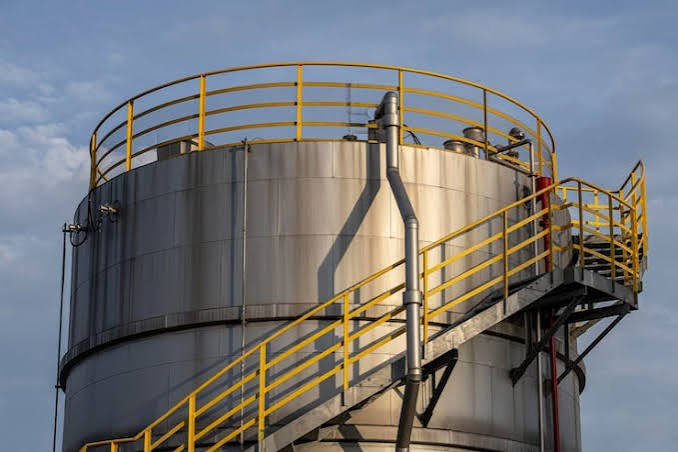
The deal arrived wrapped in credentials. It came not through an unsolicited email, not through a cold call, but through a personal vouching — the kind of introduction that compresses caution in any industry. A man in California with a university affiliation said, in effect: this is real, these people are worth your time. And behind that introduction, waiting patiently, was a web of entities assembled for a single purpose: to extract fees from a Broker before that Broker could establish that the diesel, the tanks, the refinery, and the Singapore terminal were entirely fictional.
The Broker — a commodities broker seeking a credible bulk cargo of ultra-low-sulphur diesel — was introduced to Orient Express & Co., Ltd., Tainan City, Taiwan. Orient Express presented itself as the seller-side principal: a company with access to 100,000 metric tonnes of diesel sourced from Kazakhstan, stored and ready for inspection in Singapore. At current market prices, that cargo was worth somewhere between seventy and eighty million US dollars. Not one substantive element of the transaction Orient Express presented was credible, according to public searches.
The California Introduction — How the Buyer Was Reached
The Buyer did not find this deal. It was delivered. The delivery mechanism was a personal introduction from Mr. David Chun of California , and his associate “Mic Tan,” reachable at mictanst@foxmail.com — a Chinese consumer email service notably informal for cross-border commodity brokerage of this scale. Together, they introduced the Broker to Orient Express as a seller-side principal with immediate access to a large diesel cargo.
In bulk commodity trading, introductions carry extraordinary weight. A deal of this scale does not happen between strangers. It travels through networks of brokers and intermediaries, and the person who makes the introduction is implicitly lending their credibility to everything that follows. The association of David Chun’s name with a prestigious California institution — whether or not that association was relevant to the transaction — served as credibility scaffolding for everything Orient Express subsequently presented.
Whether Chun and Tan were themselves deceived participants in a longer broker chain, witting architects of the scheme, or something in between is a matter for investigating authorities to determine. What is established by the transaction record is the consequence: their introduction placed the Broker directly in contact with Orient Express, and Orient Express then assembled and presented a transaction built entirely on fabricated foundations.
Orient Express: Every Thread Runs Through Tainan
Orient Express & Co., Ltd. was introduced to the Broker as the seller-side principal — the company with the product, the relationships, and the authority to grant inspection rights. What it actually provided was a document and a network of phantom entities, each one introduced by Orient Express and each one designed to make the transaction appear complete, bilateral, and commercially sound.
The Caspian Refinery Group, presented as the Kazakh product source? Orient Express introduced it. Zenshin Logistics (S) Pte. Ltd., presented as the Singapore tank farm custodian holding the cargo? Orient Express supplied it. Senokooil Fuel Depot SG, listed as the buyer-side receiving facility? Orient Express placed it in the transaction. Every node in the deal network traces its introduction directly back through Orient Express. It is not a peripheral participant in this scheme. It is its architect.
The operative conducting these negotiations was identified in transaction communications as Denny Hsu, who used the email address denny@apollo-global-corp.com as his primary business contact throughout. The nature and extent of his authority to act on behalf of Orient Express & Co., Ltd. is a matter for the government agencies to establish through formal inquiry.
Open-source searches found no verified public corporate registry record for Orient Express & Co., Ltd. as a petroleum trading entity in Taiwan’s Ministry of Economic Affairs database under that specific name and description. Taiwan MOEA This does not confirm or deny its registration — it is a gap that only subpoena authority can close.
The Phantom Refinery: Kazakhstan’s Most Trusted Company That Online data base could not find.
The Misspelling That Gives It AwayThe DTA document refers to the “Republic of Kazahkstan.” No government document misspells the name of its own issuing nation. This single error alone should disqualify the instrument in any professional compliance review.
The Caspian Refinery Group’s website, caspianrefinery.kz, describes the company as “the most trusted fuel company in Kazakhstan,” with a claimed refining capacity exceeding 27 million cubic metres of crude oil annually and a twenty-year operational history. caspianrefinery.kz A legal professional who independently investigated the same company on behalf of a separate potential victim found nothing to support those claims.
AI-assisted verification corroborated these findings across multiple fraud watchdog platforms. Scamminder flagged the site for unrealistic claims and a pattern of limited verifiable history consistent with fraudulent websites. Scamminder Scam-Detector assigned it a reduced trust score with phishing and spamming indicators. Scam-Detector Fuel Scam Alert, the international petroleum fraud watchdog, maintains an active listing for Caspian-branded fraud operations. Fuel Scam Alert
The domain itself runs on servers operated by TimeWeb Ltd. in St. Petersburg, Russia — in direct violation of Kazakhstani regulations requiring .kz domains to be hosted within Kazakhstan. The seller authorization document carries no BIN — a Business Identification Number that is mandatory for every legitimate Kazakh corporate entity without exception. The seller’s listed address resolves to a residential flat in Aktobe.
The $2 Tank Farm and the Depot That Never Existed
Zenshin Logistics (S) Pte. Ltd. is real in the narrowest possible sense: it appears in Singapore’s corporate registry. Confirmed UEN 201831991Z, incorporated September 18, 2018, with paid-up capital of two Singapore dollars. ACRA / OpenGov RecordOwl It operates from a virtual office address shared with hundreds of other registered entities. It has no petroleum storage infrastructure, no regulatory licences, and no insurance capacity remotely commensurate with an eighty-million-dollar cargo.
The GPS coordinates cited in the seller authorization document — 1°18’02.1”N, 103°42’49.9”E — do fall within the Jurong Island and Jurong Port petroleum storage cluster in Singapore, which is one of the largest and most active fuel storage hubs in Asia, home to major terminal operators including Vopak, Oiltanking, and Jurong Port Universal Terminal. Jurong Port In that narrow sense, the coordinates are geographically credible. That credibility is precisely what makes this detail dangerous. Most fraudsters placed their fictitious cargo inside the boundaries of a real, verifiable petroleum hub.
A rare that a company with two dollars in capital does not store eighty million dollars of fuel. The numbers are not in the same universe.
How the Trap Closes — And Why the Countdown Matters
The Dip Test Authorization does not, on its face, request money. That restraint is deliberate and sophisticated. The document presents itself as procedural — a series of steps any serious buyer would complete before inspecting a cargo. The Buyer signs. The Buyer expresses intent to proceed. Only then do the invoices arrive in sequence: Tank Storage Receipt fees, storage extension premiums, safety insurance deposits, and — the most reliable single indicator of petroleum fraud — a “commitment fee.”
Industry Warning — Ametheus Consultancy
“If any logistics company says the buyer must pay a commitment fee as per industry standard — they are surely part of the scam.” Fuel Scam Alert similarly identifies the commitment fee as among the clearest forensic markers that a Kazakhstani petroleum transaction is fraudulent. It is not a legitimate cost of trade. It is a signal that extraction has begun. Fuel Scam Alert
The Sanctions Landscape That Made Fraud Possible
Fraud does not exist in a vacuum. When Western governments imposed sweeping sanctions on Russian petroleum exports following the 2022 invasion of Ukraine, Kazakhstan became the substitute supplier of first resort for buyers across Asia and Europe who had spent careers sourcing Russian diesel. The demand was real. The urgency was real. And the criminal infrastructure built to exploit that urgency was assembled with speed and sophistication.
Fuel Scam Alert has catalogued hundreds of fraudulent Kazakhstani refinery websites appearing since 2022, each following the same template: a fake company, fabricated storage, forged documents, and very real fee extraction. Fuel Scam Alert Industry observers tracking Kazakhstan’s oil sector have noted publicly that only five major refineries operate within the country, and only two hold the licences required for international petroleum product exports — yet the market is flooded with hundreds of brokers and sellers claiming Kazakhstani refinery supply. Kazakhstan Oil Scam Alert KazFuelScamWatch The arithmetic is, on its own, a verdict.
The Legal Threat — And the Lawyer Who Wasn’t There
In accordance with standard journalistic practice, this publication affiliated company contacted the named parties prior to publication. Orient Express & Co., Ltd. and Denny Hsu were reached at the denny@apollo-global-corp.com address. David Chun and Mic Tan were contacted at mictanst@foxmail.com. The Caspian Refinery Group was contacted via its listed address. Each party was provided a summary of the investigation’s findings and invited to respond, clarify, or provide documentary evidence to the contrary.
The response received was not a denial supported by documentation. It was not an offer of evidence. It was a denial of what is available via open source and a legal threat.