
Energy / Infrastructure
U.S. Developer, Stahl Brenn Ink $100 Million Deal for Cavite Tank Farm Aimed at Manila Bay — and at Singapore’s Hold on Asian Liquids
A US-based developer has agreed to invest $100 million in Stahl Brenn Group for a 14-million-metric-ton tank farm and marine terminal on Manila Bay.
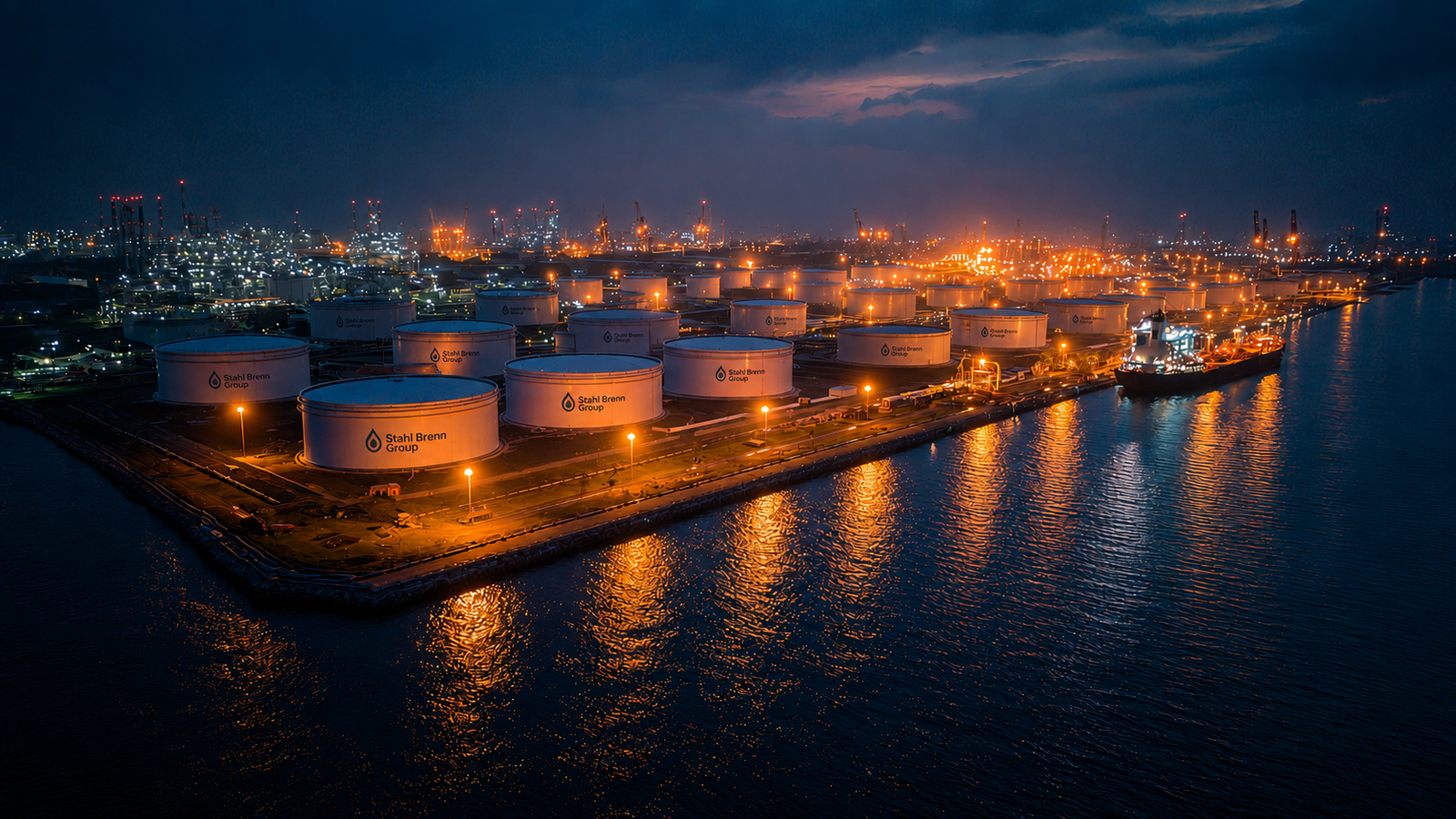
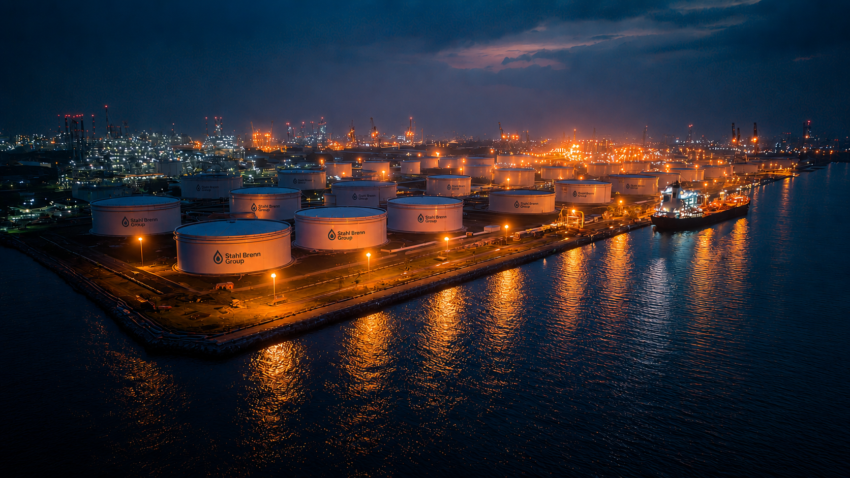
According to confidential documents reviewed by BN365 staff, an infrastructure project developer based in the USA has agreed to invest $100 million in Stahl Brenn Group, LLC, for a bulk liquid storage tank farm and marine terminal at Sangley Point, Cavite. The project is designed for about 14 million metric tons of storage on a lease covering roughly 200 hectares of land, foreshore, and submerged area on Manila Bay.
The dollar figure is modest next to Asia’s established energy hubs. The location is not. If built at the scale described in the agreement, the terminal would sit inside the Philippines’ industrial heartland, on a shoreline already being remade as a logistics gateway — and it would arrive in a year when Middle East chokepoints have again shown how thin Asian fuel buffers really are.
The Cavite deal is not Stahl Brenn’s only tank farm ambition. Stahl Brenn’s sister company and the developer are already working together on a separate port project in the United States, where the developer has secured virtually all of its permits and Stahl Brenn’s sister company controls an additional 400-acre industrial lot bordering the Mississippi River, adjoining part of the developer’s project site. Stahl Brenn’s sister company intends to build a tank farm on that 400-acre site in Louisiana as well.
Why Sangley Point matters
Sangley Point is a peninsula on the Cavite side of Manila Bay, a short haul from Metro Manila and the factories of CALABARZON. It is a former naval and air station with deep-water approaches, room to reclaim, and a decades-old government brief to become an international logistics hub with seaport and airport capacity.
That brief is no longer theoretical. The Sangley Point International Airport project is in pre-construction, with first-phase works — including hundreds of hectares of reclamation, runway extension, and a planned Cargo City — targeted to start in 2027. New road links are meant to tie the point into CAVITEX and CALAX, putting the site on the same corridor that already feeds Cavite’s industrial parks and the rest of Southern Luzon.
A tank farm there would not be a lonely depot at the edge of the map. It would sit next to the country’s largest consumer market, next to export manufacturing, and next to a bay that already handles a large share of national fuel and cargo traffic. That is the difference between storage that sits on a balance sheet and storage that can actually move product inland before a shortage shows up at the pump.
Philippine officials have spent 2026 saying the country does not have enough of the second kind. The Department of Energy has been forcing terminals to report unused tank space, and energy officials have said planned emergency imports were capped not only by price or tankers, but by a lack of empty tanks. Private inventories have hovered in a range that leaves little slack. A state strategic reserve of another 30 days has been priced in the tens of billions of pesos and is still on the drawing board.
Cavite and nearby Batangas have already seen smaller independent depots open to ease the squeeze on Metro Manila. A 14-million-metric-ton design at Sangley would be in a different league: large enough, if completed, to serve as a regional receiving point rather than just another local depot.
What a Hormuz shock actually does to a country with thin tanks
The Strait of Hormuz is the narrow mouth of the Persian Gulf. In a normal year it carries on the order of one-fifth of the world’s oil and a similar share of seaborne liquefied natural gas. Most of those barrels are bound for Asia.
2026 has not been a normal year. Conflict around the Gulf has repeatedly cut or rerouted Hormuz traffic. Flows that once ran near 20 million barrels a day have collapsed for long stretches, inventories worldwide have been drawn down at a historic pace, and importers have been forced to hunt Atlantic barrels, tap emergency stocks, and pay up for whatever still clears the waterway.
The Philippines feels that shock faster than most of its neighbors. Officials have said the country draws the overwhelming share of its crude from the Middle East. When the strait tightens, Manila does not have a large refining system or a deep state reserve to sit on. It has commercial tanks, a handful of import terminals, and a clock measured in weeks. That is why a Hormuz disruption shows up here as both a price problem and a storage problem: cargoes cannot be bought ahead if there is nowhere to put them, and cargoes already at sea cannot be held as a buffer if every tank is already spoken for.
A Manila Bay tank farm does not reopen the strait. What it can do is change the physics of the next disruption. Extra steel on the waterfront lets importers lift larger, less frequent cargoes, hold a thicker working inventory, and break bulk for Luzon without waiting for a slot in someone else’s terminal. In a Hormuz event, that is the difference between rationing truck loadings and having a few extra weeks to reroute supply from the Americas, Australia, or Northeast Asia.
It also matters for the rest of Southeast Asia. When Gulf barrels stall, product cargoes that would have been staged through a handful of hubs start competing for the same tanks. New capacity on Manila Bay would give traders another place to park distillates, fuel oil, and other bulk liquids close to a large demand center — instead of bidding against the entire region for space farther south.
Jurong’s advantage — and the opening Cavite is trying to take
Singapore’s Jurong Island is the yardstick. It is a purpose-built energy island with on the order of 20 million cubic meters of onshore liquid storage, underground caverns beneath it, VLCC berths, blending systems, and a trading community that prices much of Asia’s fuel. Independent terminals there, including Jurong Port Universal Terminal at about 2.33 million cubic meters, sit inside a cluster that industry rankings still treat as the largest tank complex in Asia-Pacific.
Jurong did not get there by accident. It sits on the Malacca Strait, the other great chokepoint of Asian energy trade, with refining, bunkering, and paper markets stacked on top of the tanks. No new farm in Cavite will copy that overnight. Singapore will remain the region’s blending and bunker capital.
The competitive opening is narrower, and more commercial. Jurong is crowded, expensive, and increasingly land-constrained. Some of the cargo that stops there is not destined for Singapore at all; it is waiting for a buyer in the Philippines, Vietnam, or the rest of the archipelago. A large independent terminal on Manila Bay could pull that last-mile storage closer to the customer: receive a mother vessel, hold product, and distribute into Luzon and nearby markets without paying Singapore rent and a second voyage.
If the Sangley design is built out toward 14 million metric tons, the Philippines would be offering traders a storage node measured in the same conversation as a major regional terminal, not a local depot. That is how challengers usually chip at Jurong — not by replacing the hub, but by taking the cargoes that only stopped in Singapore because there was nowhere else deep enough, cheap enough, or close enough to demand.
The verdict
Cavite’s bet is that Manila Bay can be that somewhere else. The $100 million from the investor does not buy Jurong. It buys a claim on a shoreline that the Philippines has been trying, for a generation, to turn into a logistics hub — at the moment when Hormuz has reminded every importer in Asia what empty tanks cost.